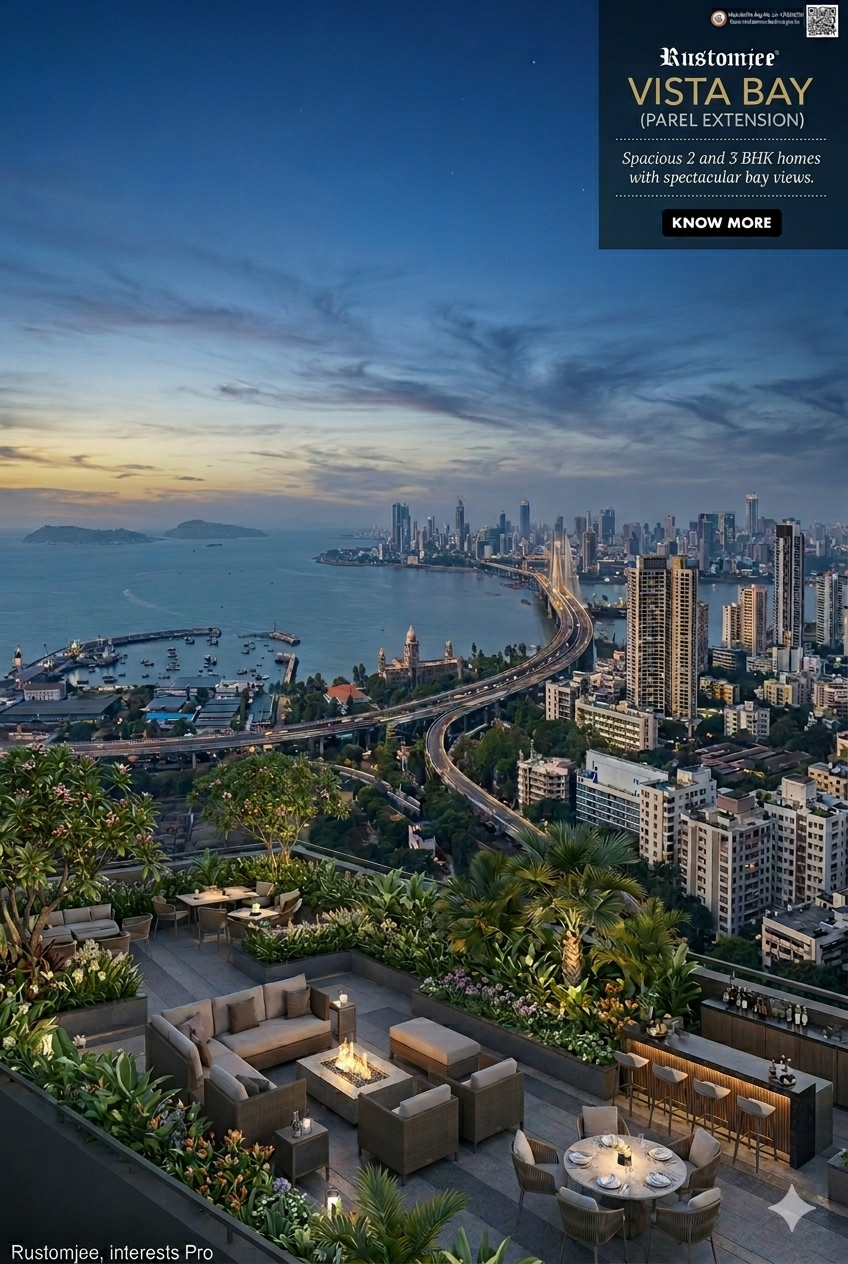


Mumbai continues to pave the way for better living conditions for its citizens. From metro development to highway construction to airport facility refurbishment, Mumbai infrastructure projects aim to dramatically improve transportation networks and efficiency, thereby raising the living standards of locals and visitors alike.
Many corporations and major enterprises have expressed interest in possible investment opportunities and promoted regional economic growth as a result of the ongoing and planned infrastructure enhancements. These variables have also had an impact on the general real estate scene, resulting in a healthy market for both buyers and developers.
Top Infrastructure Projects In Mumbai
Here are big infrastructure projects in Mumbai that will transform the city into one of the best infrastructure cities in India and around the world:
Mumbai Trans Harbour Sea Link
Navi Mumbai International Airport
Mumbai Metro Aqua Line 3 (Colaba-Bandra-Santacruz Electronics Export Processing Zone)
Mumbai Coastal Road
Versova Bandra Sea Link (VBSL)
Mumbai-Ahmedabad Bullet Train Project
Airoli Katai Naka Freeway
Ring Road Mumbai
Mumbai Trans Harbour Sea Link
The Mumbai Trans Harbour Link (MTHL), which was just launched, is one of Mumbai’s main infrastructural projects. This project, often known as India’s longest sea bridge, spans 21.6 kilometres. The main highlights are:
The bridge connects Sewri in South Mumbai to Chirle, near Nhava Sheva in Navi Mumbai.
It has cut commute time to around 20 to 25 minutes.
It is supposed to feature six lanes.
It is designed to be a strong tensile structure that will last for more than a century.
Key Features
Carries: 6-lanes (3 lanes in each direction)
Crosses: Thane Creek
Begins: Sewri, South Mumbai
Ends: Chirle, Uran taluka, Navi Mumbai
Owner: Mumbai Metropolitan Region Development Authority (MMRDA)
Design: Concrete-steel precast segment viaduct
Total length: 21.8 kilometres
Estimated Cost: Rs 18,000 crore
Width: 27 metres
Height: 25 metres
Water depth: 47 metres
Longest span: 180 metres
Piers in water: 1,089
Design life: 100+ years
Navi Mumbai International Airport
Navi Mumbai International Airport will address the expanding aviation traffic demands of the Mumbai Metropolitan Region. The airport will be built on around 1,160 hectares of land and is planned to service 60 million visitors per year and handle a remarkable 2.5 million tonnes of cargo by 2032.
Key Features
Address: X3V5+7P, Ulwe, Navi Mumbai, Pargaon Dungi, Maharashtra 410206
Code: NMIA
Airport type: Public
Runways: 2
Terminals: 3
Owner: CIDCO (26%) & MIAL (74%)
Operator: Navi Mumbai International Airport Limited (NMIAL)
Serves: Mumbai Metropolitan Region (MMR)
Location: Ulwe, Navi Mumbai, Raigad District, Maharashtra, India
Opened: 30 September 2025
Elevation AMSL: 184 ft / 56 m
Mumbai Metro Aqua Line 3
The Mumbai Metro project is a comprehensive master plan that aims to improve metro connections in the city. Mumbai Metro Line 3 (Aqua Line) would run through Colaba-Bandra-SEEPZ, linking Aarey to Bandra Kurla Complex (BKC). The line cost approximately Rs 33,000 crore. Phase 1 of the project was launched in October 2024, while Phase 2 (BKC-Colaba) began operations in August 2025. It spans 33.5 km underground and connects Cuffe Parade in the south to SEEPZ in the north with 26 stops. It implemented driverless metro trains using GoA 4 technology. Upon completion, the metro would serve 16 lakh passengers per day, cutting travel time. The final phase is planned to be finished before the end of 2025.
Key Features
Project length: 33.5 km
Stations: 28
Owner: Mumbai Metro Rail Corporation Ltd (MMRC)
Facilities: Solar panels, CBTC signalling systems and more
Phases: 3
Character: Underground
Number of tracks: 2
Type: Rapid transit
System: Mumbai Metro
Mumbai Coastal Road
Mumbai Coastal Road, one of Mumbai’s important planned infrastructure projects, would connect South and Western Mumbai. Mumbai Coastal Road is 29.20 kilometres long and costs approximately Rs 12,000 crores. The huge project streamlines transport, reducing the two-hour commute to 40 minutes. It will result in a 5-15 percent increase in home prices in Marine Drive, Mahalaxmi, and Worli. Built on 186 hectares, this land will include bridges, tunnels, culverts, interchanges, and eight lanes to improve road connectivity. The southern portion will go from the Princess Street flyover to the Bandra Worli Sea Link. It will increase road connectivity, cut fuel consumption, and alleviate urban traffic.
Key Features
Length: 29.2 km
Phases: 2
Lanes: 8
Travel time: Reduce 70% travel time
Fuel use: Reduce 34% fuel consumption
Cost: Rs. 12,000 crores
Versova Bandra Sea Link (VBSL)
The Versova Bandra Sea Link (VBSL) is another upcoming infrastructural project in Mumbai. The project is intended to improve road safety while also providing a speedy commute. The main highlights are:
It is an extension of the Bandra-Worli Sea Link and will connect to it.
It will connect Juhu-Koliwada with Otter’s Club.
A new sea link bridge will be developed between Nani Nani Park in Versova and Bandra.
The project is expected to be finished by August 2027.
The anticipated defect liability period may last until December 2028.
Key Features
Total length: 17,170 m
Opening: August 2027
Carries Motor vehicles
Crosses Arabian Sea
Bridge type: Cable-stayed bridge, Viaduct, Cantilever bridge
Longest span: 300 m
Width: 28 metres
No. of lanes: 4 in each direction
Construction cost: Rs 11,333 crore
Owner: MSRDC
Constructed by: APCO Infratech (70%); Webuild (30%)
Facilities: Traffic monitoring systems, emergency rescue provisions, bus bays with shelters, and noise barriers
Mumbai-Ahmedabad Bullet Train Project
To connect the two major cities, the government is constructing the Mumbai-Ahmedabad Bullet Train project. The train project, which includes a 508-kilometer high-speed rail line, will provide significant respite to commuters. The rail route will reduce travel time between these cities to 2 hours and 57 minutes, down from 7 to 8 hours previously. It is expected to boost real estate demand in Thane, Dombivali, and Kalyan.
The project is estimated to cost Rs. 1.1 lakh crores and will have 12 stations. Along the route, there is a Sabarmati passenger hub and a HSR training institute. After overcoming initial land acquisition problems, the project is scheduled for completion in August 2026.
Key Features
Owner: Indian Railways
Termini: Mumbai & Ahmedabad
Stations: 12
Rolling stock depots: 3
Maintenance depots: 8
Type: High-speed rail
Operator: National High Speed Rail Corporation Limited
Line length: 508.18 km
Character: Elevated, underground, undersea and grade-separated
Airoli Katai Naka Freeway
The Airoli Katai Naka motorway is a futuristic project that connects the Airoli Bridge to Parsik, Shilphata, and Katai Naka in Maharashtra. The project is overseen by the Mumbai Metropolitan Region Development Authority. This elevated motorway is 12.30 km long and has six lanes. People and real estate in Mumbai, Kalyan, and the Badlapur Industrial Estate will benefit from this project. It is erected in three phases, as follows:
Phase 1 extends 5.2 kilometres. It connects Thane Belapur Road and NH-48 at the Mumbra Bypass, including a 3.5 km portion under NH-48 and a 1.7 km tunnel that runs through Parsik Hill.
Phase 2 has a 2.2 km elevated road on the east end of the Airoli bridge.
Phase 3 contains a 6.3-kilometer road next to the Diva-Pavel railway line. It connects NH-48 with Katai Naka.
Key Features
Total Estimated Cost: Rs. 944 crore
Total Length: 12.30 km
Tunnel’s Length: 1.7 km
Lanes: 6
Owner: Mumbai Metropolitan Region Development Authority (MMRDA)
Project Model: EPC (Engineering, Procurement and Construction)
Ring Road Projects in Mumbai
The Mumbai Metropolitan Region Development Authority (MMRDA) has proposed a Ring Road proposal. The idea will help minimise traffic congestion on main highways. MMRDA, Municipal Corporation, and State Road Development Corporation (MSRDC) will work together to create these ring roads. The ring roads will begin and conclude at Nariman Point. The following ring roads will be developed:
The first ring route connects Nariman Point to the Coastal Road, then to the Worli Sewri Connector, the Eastern Freeway, and the Orange Gate Tunnel before returning to Nariman Point.
The second ring road will connect Nariman Point to the Bandra-Worli Sea Link, Western Express Highway, Santacruz Chembur Link Road, Eastern Express Highway, Eastern Freeway, Orange Gate Tunnel, and back to Nariman Point.
The third ring will connect Nariman Point to Bandra Worli Sea Link, Jogeshwari Vikhroli Link Road, Kanjurmarg Junction, Eastern Freeway, and Orange Gate Tunnel before returning to Nariman Point.
The fourth ring project will go from Nariman Point to Bandra Worli Sea Link, Goregaon Mulund Link Road, Eastern Freeway, and Orange Gate Tunnel before returning to Nariman Point.
Mumbai-Hyderabad Expressway, Metro Expansion and More
Deputy Chief Minister Devendra Fadnavis recently announced ambitious plans for Mumbai’s infrastructure. The main new project is known as the Jankalyan Motorway. This 450-kilometer road will connect Mumbai to Hyderabad, going through Kalyan and Latur. This new route will be a game changer because it reduces travel distance from nearly 700 kilometres to approximately 530 km. Furthermore, it will connect local residents to the Atal Setu and a projected tunnel near Badlapur. This means that the trip from Mumbai to Badlapur should take around 35 minutes.
Next, Fadnavis confirmed that the Mumbai Metro network will expand significantly. Currently, around 91 kilometres of Metro lines are operational. The objective is to increase this to 132 kilometres over the following two years. The government promises to open at least 50 kilometres of new Metro track per year.
Finally, there is good news for your finances. The Deputy Chief Minister said that power bills for Mumbai residences and the rest of the state will be reduced by 2% per year for the next five years. These initiatives demonstrate the state’s commitment to better roadways, more convenient local transport, and lower costs for citizens.
Other Infrastructure Projects In Mumbai
Mulund – Goregaon Link Road
Sewri-Worli Elevated Corridor
Delhi-Mumbai Industrial Corridor
Thane Borivali Tunnel
Dombivli-Thane Link Road
Chheda Nagar Flyover
Airoli-Katai Tunnel Road
Dombivli-Thane Link Road
Chheda Nagar Flyover
Airoli-Katai Tunnel Road
Dombivli Mankoli Flyover
Government Clears Big-Ticket Funding for Urban Growth Projects
The Maharashtra government has authorised an INR 2,000 crore loan from the Housing and Urban Development Corporation (HUDCO). It will accelerate the state’s urban infrastructure development programs. It will be utilised to address critical urban concerns such as inadequate transportation, water supply, sanitation, and housing complexes, as well as general quality of life in increasing cities.
The money will be lent to various urban local bodies (ULBs) so that they can carry out big municipal projects. The monies will also be used to address backlogs caused by funding shortages. Officials stated the loan will have a defined payback system to foster financial discipline while allowing for faster project delivery.
With Maharashtra’s fast urbanisation, there is a growing demand for efficient, contemporary infrastructure. This initiative should create new sources of employment and investment while also addressing long-standing urban issues such as congestion, pollution, and inefficient basic services.
Urban development planners hailed the decision as a game changer, predicting that enhanced infrastructure will boost Maharashtra’s competitiveness and attract private sector investment. The state government hopes that this investment will have a long-term, transformative impact, paving the way for smarter, greener, and more habitable communities.
Ending Note On Infrastructure Projects In Mumbai
As Mumbai develops as a financial hub, these initiatives demonstrate a dedication to improving and modernising infrastructure. These projects include the Mumbai Trans Harbour Sea Link, Navi Mumbai International Airport, Mumbai Metro, Mumbai Coastal Road, and others. These big infrastructure projects in Mumbai will improve the city’s accessibility, technological advancement, and beauty. They will also influence the city’s economic landscape and contribute to its expansion. The Mumbai real estate sector will also see price hikes. Improved connection would help communities such as Bhandup, Dombivli, Byculla, and Kalyan, raising housing prices in these areas.